Buy fjz.eu ?
We are moving the project
fjz.eu .
Are you interested in purchasing the domain
fjz.eu ?
domain@kv-gmbh.de · 0541-91531010
Buy fjz.eu ?
What is epistemology?
Epistemology is the branch of philosophy that deals with the nature, scope, and limitations of knowledge. It seeks to understand how we acquire knowledge, what constitutes knowledge, and how we can justify our beliefs. Epistemology explores questions such as: What is the difference between belief and knowledge? How do we know what we know? What are the sources of knowledge? It also examines the relationship between knowledge, truth, and belief. Overall, epistemology is concerned with understanding the nature of knowledge and the processes by which we come to know things. **
What is Kant's epistemology?
Kant's epistemology is centered around the idea that our knowledge of the world is shaped by both our sensory experiences and our innate mental structures. He argued that our minds actively organize and interpret sensory input, rather than passively receiving information from the external world. Kant also introduced the concept of synthetic a priori knowledge, which refers to truths that are not derived from experience but are necessary for our understanding of the world. Overall, Kant's epistemology emphasizes the role of reason and the mind in shaping our knowledge and understanding of reality. **


Similar search terms for Epistemology
Top-Angebote
Products related to Epistemology:
-
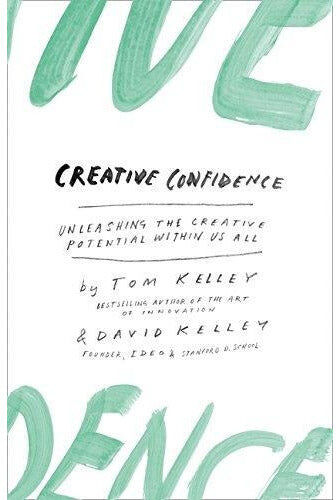
HARPERCOLLINS Creative Confidence by Tom & David Kelley – Unleashing Your Creative Potential & Innovation MindsetA powerful and inspiring book from the founders of IDEO, the award-winning design firm, on unleashing the creativity that lies within each and every one of us. Too often, companies and individuals assume that creativity and innovation are the domain of the ‘creative types’. But two of the foremost experts in innovation, design and creativity on the planet show us that each and every one of us is creative. In an entertaining and inspiring narrative that draws on countless stories from their work at IDEO, and with many of the world's top companies and design firms, David and Tom Kelley identify the principles and strategies that will allow us to tap into our creative potential in our work lives, and in our personal lives, allow us to think outside the box in terms of how we approach and solve problems. ‘Creative Confidence’ is a book that will help each of us be more productive and successful in our lives and in our careers.4,95 £*Shipping: 1,99 £Secure redirect to the provider
-
Innovation: Fourth Edition Board Game - 2-4 Players - New Edition with Age 11 CardsStrategic card game for 2 to 4 players. Build a civilization through ideas, inventions, and cultural advances. Includes updated artwork, streamlined rules, and new expansion The Unseen.17,59 £*Shipping: 3,95 £Secure redirect to the provider
-
Ravensburger Harry Potter Memory Game Mini Edition - Compact Design - Ravensburger QualityBring magic to family nights with the Ravensburger Harry Potter Memory Game Mini Edition. This compact, collectible challenge features vibrant, durable cards printed with iconic moments and characters from the wizarding world. Designed for easy handling by little hands and satisfying shuffles for adults, the mini edition upholds Ravensburger quality with premium materials and precise cuts. Players flip two cards, seeking matching Hogwarts scenes, which strengthens memory, focus, and turn-taking. Perfect for family nights, this game is ideal for gifting and great for travel, suitable for kids and grown-ups alike. The compact design makes it a cozy, portable activity that travels easily.4,82 £*Shipping: 3,95 £Secure redirect to the provider
-
Farberware Cordless Platinum Stick Vacuum Cleaner, Smart Sensor Technology for Carpet and Hard Floors, Bendable DesignFarberware Cordless Platinum Stick Vacuum Cleaner, Smart Sensor Technology for Carpet and Hard Floors, Bendable Design, Converts to Handheld Vacuum Description: Life is messy, but with Farberware’s Cordless Platinum Stick Vacuum, you can tackle every…146,99 $*Shipping: 0,00 $Secure redirect to the provider



-
What is John Locke's epistemology?
John Locke's epistemology is centered around the idea that knowledge comes from experience and observation. He believed that the mind at birth is a blank slate, or tabula rasa, and that all knowledge is derived from sensory experiences. Locke also emphasized the importance of reason and reflection in understanding and interpreting these experiences. Overall, Locke's epistemology can be characterized as empiricist, as it emphasizes the role of sensory experience in the acquisition of knowledge. **
-
How can one understand epistemology?
One can understand epistemology by studying the nature of knowledge, belief, and justification. It involves examining how we acquire knowledge, what counts as knowledge, and how we can be justified in our beliefs. By exploring different theories and perspectives on these topics, one can gain a deeper understanding of how we come to know things and how we can be confident in our beliefs. Engaging with philosophical texts, discussions, and thought experiments can also help in understanding the complexities of epistemology. **
-
What is Kant's theory of epistemology?
Kant's theory of epistemology, as outlined in his Critique of Pure Reason, centers around the idea that our knowledge of the world is shaped by both our sensory experiences and the innate structures of our minds. He argued that our minds actively organize and interpret sensory data through concepts such as space, time, and causality, which are inherent to human cognition. Kant also proposed that there are limits to what we can know about the world, as our understanding is constrained by the nature of our cognitive faculties. Overall, Kant's epistemological theory emphasizes the role of both experience and reason in shaping our knowledge of the world. **
-
What are the central problems of epistemology?
The central problems of epistemology revolve around the nature, scope, and limits of knowledge. One key problem is the question of how we can know anything at all, and what the criteria for knowledge are. Another central problem is the issue of skepticism, which challenges the possibility of knowledge by raising doubts about the reliability of our senses and reasoning. Additionally, epistemology grapples with the problem of the sources of knowledge, such as whether knowledge comes from experience, reason, or some other source. Overall, the central problems of epistemology concern the nature of knowledge, how we acquire it, and how we can be justified in claiming to know something. **


What is the epistemology according to Kant?
According to Kant, epistemology is the branch of philosophy that deals with the nature, scope, and limits of human knowledge. Kant believed that knowledge is not solely derived from sensory experience but also involves the mind's innate structures and concepts. He argued that our understanding of the world is shaped by both our sensory experiences and the a priori concepts of space, time, and causality that are inherent in our minds. Kant's epistemology emphasizes the active role of the mind in organizing and interpreting sensory data to construct our understanding of reality. **
What is an example of abstraction in epistemology?
An example of abstraction in epistemology is the concept of "justice." In epistemology, justice is an abstract concept that is not directly observable or measurable. It is a complex idea that is formed through the process of abstracting common characteristics from various specific instances of justice. This abstraction allows us to understand and discuss justice as a general concept, even though it may manifest differently in different contexts. Abstraction in epistemology enables us to form general concepts and principles that help us make sense of the world and our experiences. **
Top-Angebote
Products related to Epistemology:
-
HarperCollins Creative Confidence by David Kelley & Tom Kelley - IDEO Design Thinking Guide - Paperback - Business & Innovation Non Fiction BookDevelop your creative potential with this paperback edition of 'Creative Confidence' by David Kelley. The book, published by HarperCollins, argues that creativity is a skill anyone can build, not a rare gift reserved for a few. Drawing on decades of experience helping companies innovate, the authors share practical tools for turning doubt into confident action. This book sets out to demolish the myth that creativity belongs only to 'creative types' and offers real-world advice for anyone looking to boost their creative skills.4,99 £*Shipping: 2,99 £Secure redirect to the provider
-
Sesderma Reti Age 5 Liposomal Serum Anti-Aging Innovation 30mLA facial serum for wrinkles and signs of ageing. Reduces wrinkles and fine lines. Hydrates and strengthens barrier. Restores youthful radiance. 5-Retinoid System: smooths wrinkles, accelerates renewal, and boosts collagen. Biomimetic Peptides: fill expression lines by stimulating collagen synthesis.53,26 £*Shipping: 5,22 £Secure redirect to the provider
-
HARPERCOLLINS Creative Confidence by Tom & David Kelley – Unleashing Your Creative Potential & Innovation MindsetA powerful and inspiring book from the founders of IDEO, the award-winning design firm, on unleashing the creativity that lies within each and every one of us. Too often, companies and individuals assume that creativity and innovation are the domain of the ‘creative types’. But two of the foremost experts in innovation, design and creativity on the planet show us that each and every one of us is creative. In an entertaining and inspiring narrative that draws on countless stories from their work at IDEO, and with many of the world's top companies and design firms, David and Tom Kelley identify the principles and strategies that will allow us to tap into our creative potential in our work lives, and in our personal lives, allow us to think outside the box in terms of how we approach and solve problems. ‘Creative Confidence’ is a book that will help each of us be more productive and successful in our lives and in our careers.4,95 £*Shipping: 1,99 £Secure redirect to the provider
-
Innovation: Fourth Edition Board Game - 2-4 Players - New Edition with Age 11 CardsStrategic card game for 2 to 4 players. Build a civilization through ideas, inventions, and cultural advances. Includes updated artwork, streamlined rules, and new expansion The Unseen.17,59 £*Shipping: 3,95 £Secure redirect to the provider
-
What is epistemology?
Epistemology is the branch of philosophy that deals with the nature, scope, and limitations of knowledge. It seeks to understand how we acquire knowledge, what constitutes knowledge, and how we can justify our beliefs. Epistemology explores questions such as: What is the difference between belief and knowledge? How do we know what we know? What are the sources of knowledge? It also examines the relationship between knowledge, truth, and belief. Overall, epistemology is concerned with understanding the nature of knowledge and the processes by which we come to know things. **
-
What is Kant's epistemology?
Kant's epistemology is centered around the idea that our knowledge of the world is shaped by both our sensory experiences and our innate mental structures. He argued that our minds actively organize and interpret sensory input, rather than passively receiving information from the external world. Kant also introduced the concept of synthetic a priori knowledge, which refers to truths that are not derived from experience but are necessary for our understanding of the world. Overall, Kant's epistemology emphasizes the role of reason and the mind in shaping our knowledge and understanding of reality. **
-
What is John Locke's epistemology?
John Locke's epistemology is centered around the idea that knowledge comes from experience and observation. He believed that the mind at birth is a blank slate, or tabula rasa, and that all knowledge is derived from sensory experiences. Locke also emphasized the importance of reason and reflection in understanding and interpreting these experiences. Overall, Locke's epistemology can be characterized as empiricist, as it emphasizes the role of sensory experience in the acquisition of knowledge. **
-
How can one understand epistemology?
One can understand epistemology by studying the nature of knowledge, belief, and justification. It involves examining how we acquire knowledge, what counts as knowledge, and how we can be justified in our beliefs. By exploring different theories and perspectives on these topics, one can gain a deeper understanding of how we come to know things and how we can be confident in our beliefs. Engaging with philosophical texts, discussions, and thought experiments can also help in understanding the complexities of epistemology. **
Similar search terms for Epistemology
-
Ravensburger Harry Potter Memory Game Mini Edition - Compact Design - Ravensburger QualityBring magic to family nights with the Ravensburger Harry Potter Memory Game Mini Edition. This compact, collectible challenge features vibrant, durable cards printed with iconic moments and characters from the wizarding world. Designed for easy handling by little hands and satisfying shuffles for adults, the mini edition upholds Ravensburger quality with premium materials and precise cuts. Players flip two cards, seeking matching Hogwarts scenes, which strengthens memory, focus, and turn-taking. Perfect for family nights, this game is ideal for gifting and great for travel, suitable for kids and grown-ups alike. The compact design makes it a cozy, portable activity that travels easily.4,82 £*Shipping: 3,95 £Secure redirect to the provider
-
Farberware Cordless Platinum Stick Vacuum Cleaner, Smart Sensor Technology for Carpet and Hard Floors, Bendable DesignFarberware Cordless Platinum Stick Vacuum Cleaner, Smart Sensor Technology for Carpet and Hard Floors, Bendable Design, Converts to Handheld Vacuum Description: Life is messy, but with Farberware’s Cordless Platinum Stick Vacuum, you can tackle every…146,99 $*Shipping: 0,00 $Secure redirect to the provider
-
All Categories Goods Replacement Front Left Door Pull Handle Cup For Dodge Ram Quality Fit And Performance Replacement Front Left Door Pull Handle Cup For Dodge Ram Quality Fit And PerformanceUpgrade Your Dodge Rams Door Pull with 4741405 Handle Cup Looking for a replacement for your Dodge Ram's wornout door handle cup The 1 pc of Front Left Door Pull Handle Cup 4741405 is designed specifically for 19942002 Dodge Ram 1500, 2500, and 3500...44,97 $*Shipping: 0,00 $Secure redirect to the provider
-
What is Kant's theory of epistemology?
Kant's theory of epistemology, as outlined in his Critique of Pure Reason, centers around the idea that our knowledge of the world is shaped by both our sensory experiences and the innate structures of our minds. He argued that our minds actively organize and interpret sensory data through concepts such as space, time, and causality, which are inherent to human cognition. Kant also proposed that there are limits to what we can know about the world, as our understanding is constrained by the nature of our cognitive faculties. Overall, Kant's epistemological theory emphasizes the role of both experience and reason in shaping our knowledge of the world. **
-
What are the central problems of epistemology?
The central problems of epistemology revolve around the nature, scope, and limits of knowledge. One key problem is the question of how we can know anything at all, and what the criteria for knowledge are. Another central problem is the issue of skepticism, which challenges the possibility of knowledge by raising doubts about the reliability of our senses and reasoning. Additionally, epistemology grapples with the problem of the sources of knowledge, such as whether knowledge comes from experience, reason, or some other source. Overall, the central problems of epistemology concern the nature of knowledge, how we acquire it, and how we can be justified in claiming to know something. **
-
What is the epistemology according to Kant?
According to Kant, epistemology is the branch of philosophy that deals with the nature, scope, and limits of human knowledge. Kant believed that knowledge is not solely derived from sensory experience but also involves the mind's innate structures and concepts. He argued that our understanding of the world is shaped by both our sensory experiences and the a priori concepts of space, time, and causality that are inherent in our minds. Kant's epistemology emphasizes the active role of the mind in organizing and interpreting sensory data to construct our understanding of reality. **
-
What is an example of abstraction in epistemology?
An example of abstraction in epistemology is the concept of "justice." In epistemology, justice is an abstract concept that is not directly observable or measurable. It is a complex idea that is formed through the process of abstracting common characteristics from various specific instances of justice. This abstraction allows us to understand and discuss justice as a general concept, even though it may manifest differently in different contexts. Abstraction in epistemology enables us to form general concepts and principles that help us make sense of the world and our experiences. **
* All prices are inclusive of VAT and, if applicable, plus shipping costs. The offer information is based on the details provided by the respective shop and is updated through automated processes. Real-time updates do not occur, so deviations can occur in individual cases. ** Note: Parts of this content were created by AI.